
About the project
London’s Rapid Transit system is designed to make it easier for people to move around the city while creating streets that are more welcoming and accessible. Public art is being added to Rapid Transit shelters to enhance the transit experience and reflect the character of the neighbourhoods they serve.
Artwork by local London artists will appear on shelters along key Rapid Transit corridors, including the Downtown Loop, East London Link, and Wellington Gateway. The art will celebrate London’s cultural heritage and identity, guided by themes identified through community input during the Rapid Transit Environmental Assessment. These themes include Indigenous culture, diversity, local history, arts and culture, London’s UNESCO music designation, transportation, wellness, and education.
Staged installation
Public art will be installed in stages as shelters are built, coordinated with ongoing Rapid Transit construction. The first art installation rollout will begin in spring 2026, starting with eleven shelters along the Downtown Loop and East London Link corridors. Additional artwork will follow as shelters are completed along Wellington Gateway and the remaining East London Link locations.
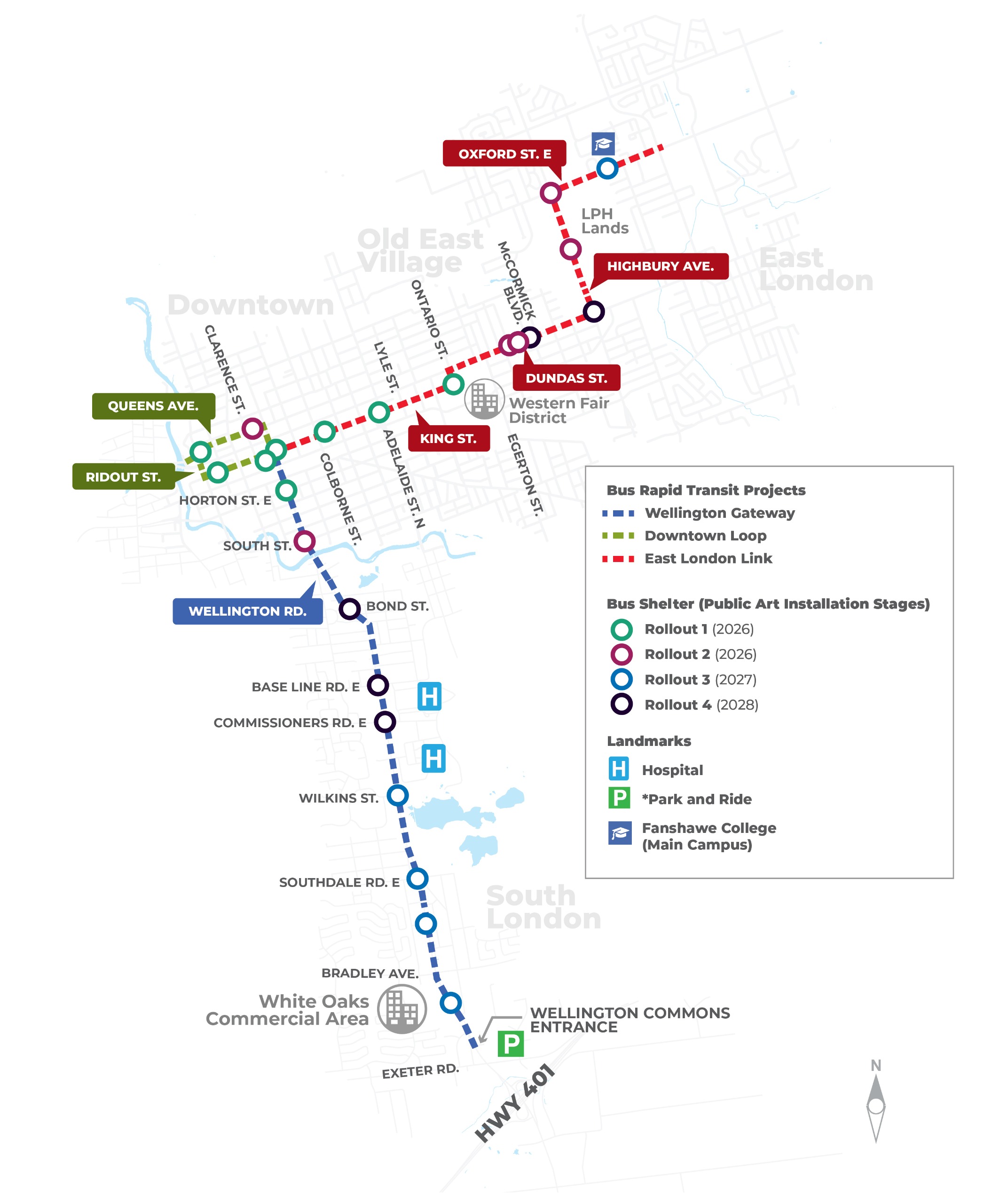
Above: Map of Rapid Transit corridors showing the stages of public art installations across all planned and built shelters.
For the first rollout, artists were selected through the City of London and London Arts Council’s established processes, including submissions from the Community Arts Investment Program and the Public Art and Monument Program. Future stages will include additional calls for proposals and opportunities for community input.
First art at Ontario & King
The first public art installation is now in place at the Ontario and King shelter. Midway Memories, by local artist Katie Wilhelm, combines archival imagery of London’s Western Fair District with contemporary brushwork, connecting the city’s history to the present.
As the first installation, this shelter allows the project team to test materials and installation methods, while giving residents an early look at how art will enhance Rapid Transit shelters across the city ahead of the full rollout in spring 2026.
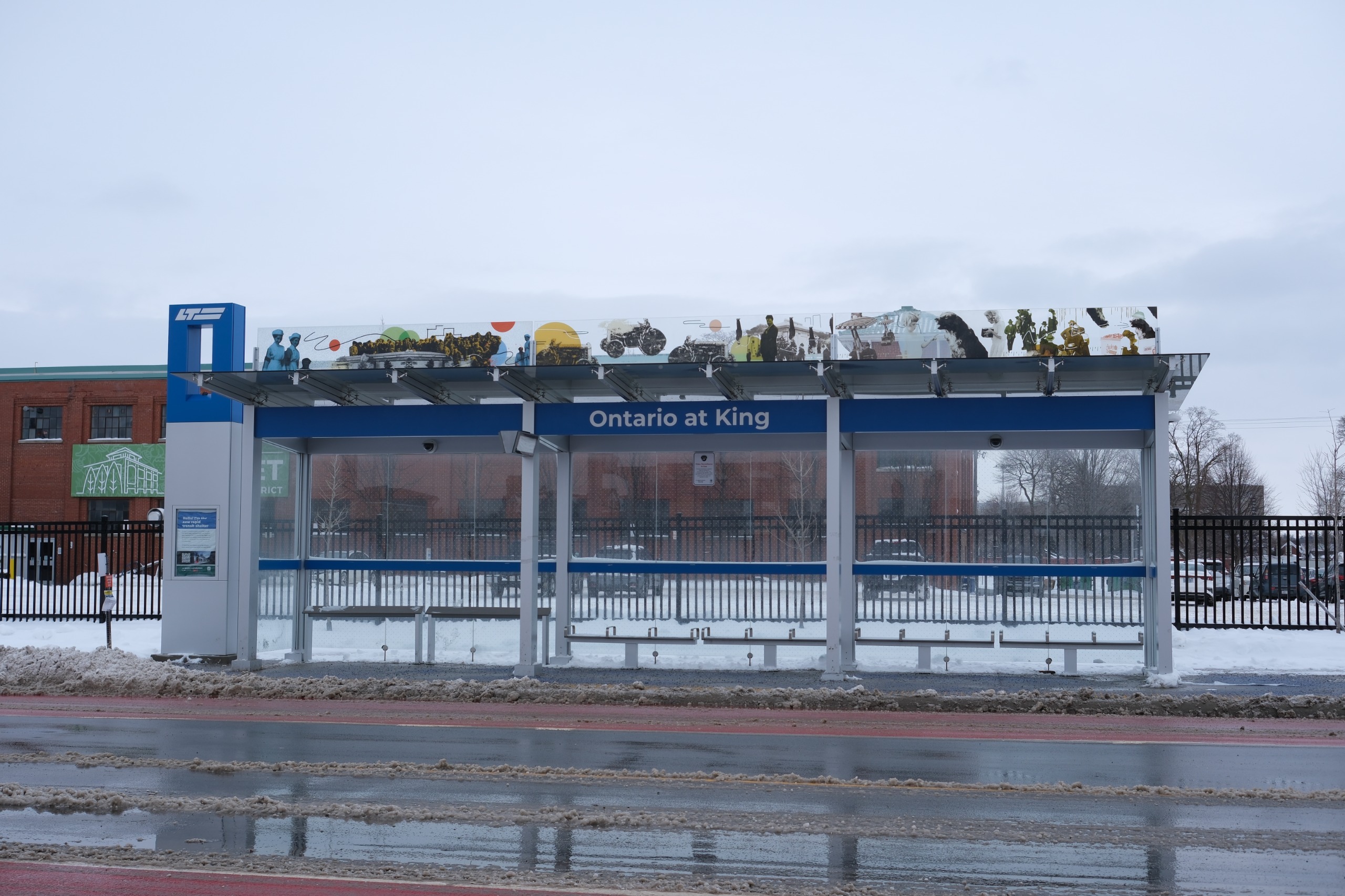
Above: London’s first Rapid Transit shelter at Ontario and King Street, installed in spring 2024, is the first to receive public art.
Frequently Asked Questions
The City is adding public art to Rapid Transit shelters to celebrate local identity, reflect cultural heritage, and enhance the transit experience. This responds directly to feedback from the Rapid Transit Environmental Assessment, where residents expressed a desire for shelters that showcase themes unique to each neighbourhood. Integrating art into transit infrastructure fosters community pride and creates more welcoming public spaces.
Public art will be installed at 41 Rapid Transit shelters across London. The first rollout, beginning in spring 2026, will include 11 shelters along the Downtown Loop, East London Link, and Wellington Gateway corridors. Future rollouts will extend to the Wellington Gateway and remaining East London Link shelters
Ontario and King was London’s first Rapid Transit shelter, installed in spring 2024. It was chosen to pilot the public art program, allowing the project team to refine construction and installation processes before expanding to additional shelters.
The installation provides lessons that ensure future installations are efficient, durable, and high-quality. It also gives residents an early look at how art will enhance transit shelters citywide. A minor panel crack was identified during installation is being replaced and does not affect safety or the project timeline.
Themes were identified through public consultation during the Environmental Assessment. They reflect neighbourhood-specific cultural heritage, including Indigenous culture, diversity, local history, arts and culture, UNESCO music designation, transportation, wellness, and education. Each theme is tailored to its neighbourhood to celebrate local identity and community pride.
The artwork is permanent. It is created using frit printing technology, which embeds designs between layers of heat-soaked tempered glass. This ensures vibrant, long-lasting panels that resist fading and damage from everyday use. Compex Display, the vendor of record, provides warranty and quality assurance, and the City will address any issues in collaboration with them.
In July 2024, Council awarded the Vendor of Record for the supply, fabrication, and installation of 41 art locations, with a total contract value of roughly $1.9 million. Adding art during construction is a cost-effective way to improve public spaces and highlight neighbourhood culture.
For comparison, the larger Rapid Transit program, which includes the Downtown Loop, East London Link, and Wellington Gateway, represents about $454 million in investment and is funded through Federal and Provincial contributions and Development Charges.
The federal government also encourages public-facing infrastructure projects to invest approximately 1 percent of the project value in public art, and this program comes in well below that.
Public art is integrated into Rapid Transit shelters that are already major infrastructure investments, making it a cost-effective way to celebrate cultural heritage, enhance the transit experience, and foster community pride. Incorporating art into transit infrastructure is a common practice in cities worldwide.
Cultural heritage themes were first identified through public consultation. For future art rollouts 2, 3, and 4, residents will have an active role in shaping the artwork at new shelter locations to ensure it reflects the identity of each neighbourhood.
For the first rollout of art, including the shelter at Ontario and King, the City partnered with the London Arts Council to select artists from an existing pool of qualified applicants. This allowed the project to begin quickly while still ensuring high-quality, locally relevant art. Future phases will include public engagement opportunities.
The frit printing process embeds artwork between layers of tempered glass, which provides durability and resistance to everyday wear and tear. While the frit does not add structural strength, the panels are heat-soaked and tempered to withstand damage. The technology is designed for long-term durability, and any issues will be addressed by the City and the vendor.
Local artists can participate in future stages of the Rapid Transit art program when calls for proposals for Stages 3 and 4 become available. Artists can check upcoming opportunities on the London Arts Council website and social media.
Current engagement opportunities
Engagement for the second round of art installations (listed below) is now closed. Check back later for future opportunities.
- Dundas at Kellogg’s (Eastbound and Westbound)
- Dundas at Eleanor (Eastbound, with McCormick to follow)
- Highbury at Corinne (Northbound and Southbound)
- Highbury at Oxford (Northbound and Westbound, mirrored stations)