
What size of curbside bin? Small or medium?
4 January 2021
|
The curbside container is used to store Green Bin materials and will be set out to the curbside on collection day. The Green Bin is normally stored in a garage or outside, like how Blue Boxes and garbage bins are stored.
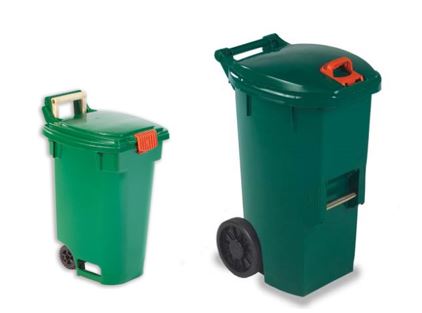
Through preliminary research and initial public feedback, staff have narrowed the curbside container choice to two options: a small (about 40 to 50 litre) and a medium size (about 70 to 80 litre) size. These carts are common in other Ontario municipalities. The Cities of Ottawa and Hamilton have both sizes available to residents.
Larger cart sizes are used in a few municipalities but are not being considered for London at this time. The larger cart would require a semi or fully automated lift mechanism style truck, which would increase collection costs. The larger cart size is also more likely to be used by residents for yard waste which will increase Green Bin processing costs.
Choosing the right container size The right size container will be different for different households. How do you know what size is best for you? It will depend on several factors. Most important is to have a container that is big enough to hold the amount of organic waste that will be created in your household. You also don’t want it too big that storage space becomes a problem.
The average quantity of organic waste produced by a household is shown in the table below, however, the quantity will vary for each household. Factors that will impact the quantity include how many people live in the household, the age of household members, how meals are prepared (e.g. from scratch vs pre-processed foods), and how much avoidable food waste is created (i.e., the tendency to waste food). Some households are already composting food waste with a backyard composter and may or may not continue after the Green Bin program is implemented. Consider the factors above when you select a preferred cart size for you and your household.
The type of materials permitted in the Green Bin will also be a factor. For example, if London’s program permits diapers/sanitary products and pet waste in the Green Bin, then households that generate these materials will need to consider this in their selection of bin size. The average generation rate of these materials is noted in the table below.
The table above indicates approximate quantities (in kilograms) of organic materials generated per London household, on average, each year and each week.
This data is based on curbside audits of household garbage set out to the curb for collection.
Comparing Container Sizes | ||||||||||||||||||||||||
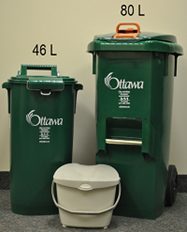
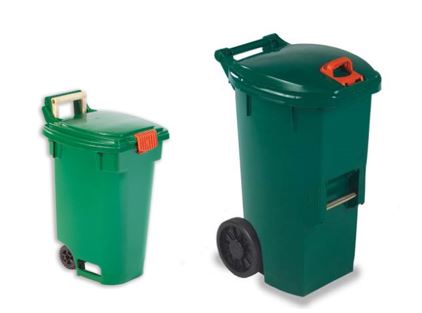
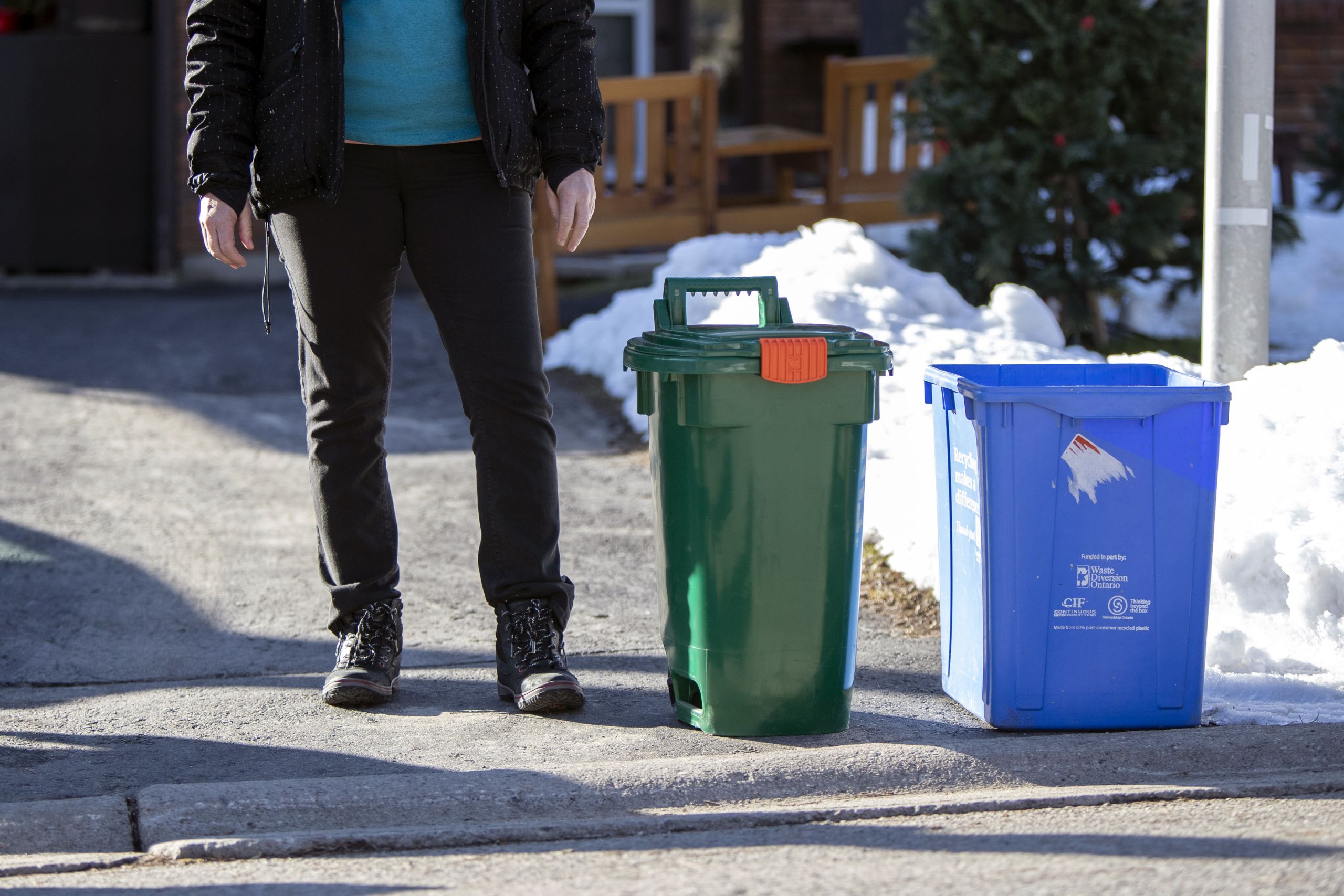 Above: A small sized Green Bin
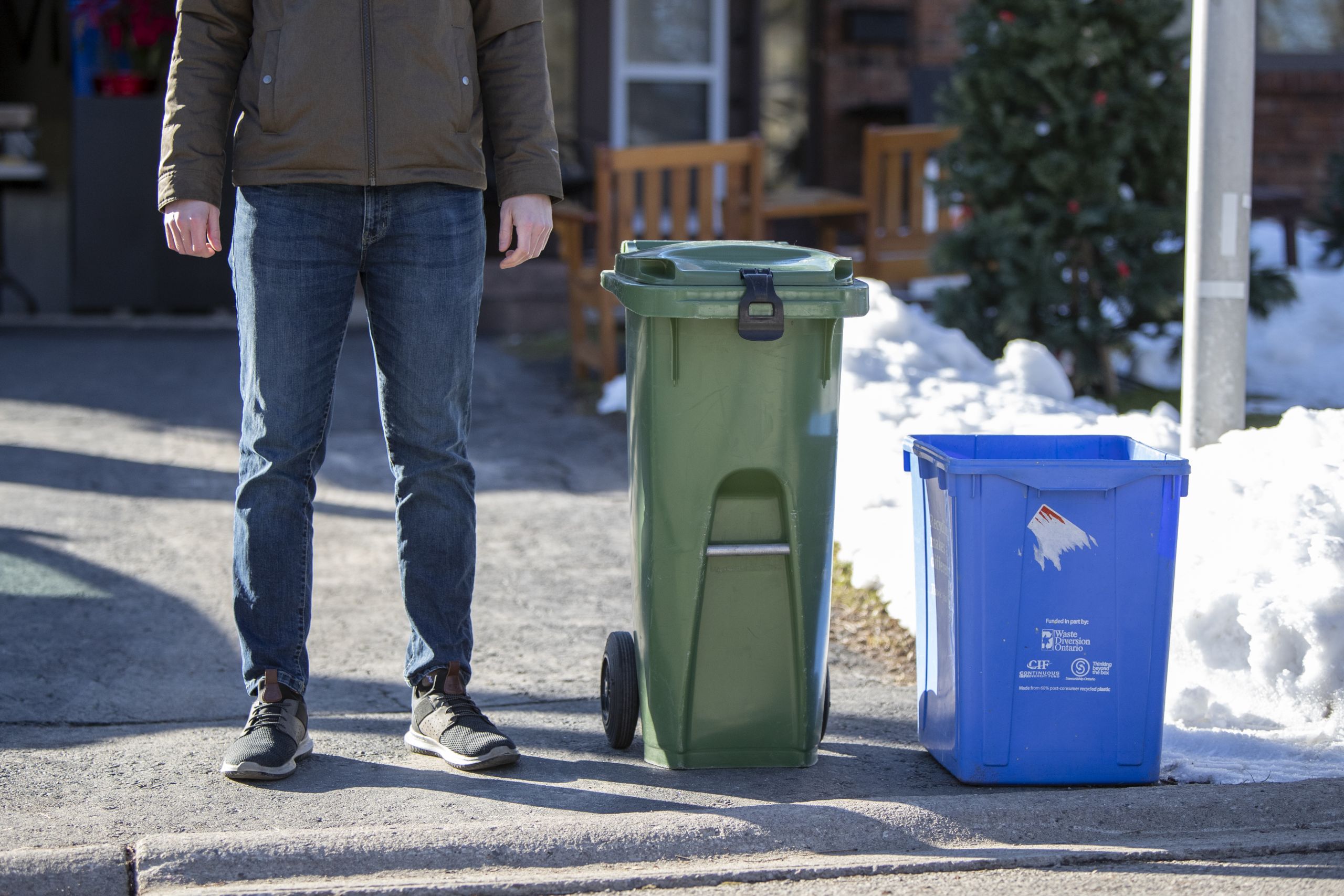 Above: A medium sized Green Bin
What about other municipalities?
Green Bin curbside carts used in Ontario Municipalities
Municipality |
Green Bin Carts Sizes in Use (litres) |
City of Toronto |
46/971 |
Region of York |
46 |
City of Guelph |
80 |
Region of Niagara |
46 |
City of Ottawa |
46, 80 |
Simcoe County |
46 |
City of St Thomas |
240 |
Region of Waterloo |
46 |
City of Barrie |
46 |
Dufferin County |
46 |
Region of Durham |
46 |
City of Hamilton |
46 |
Region of Halton |
46 |
City of Kingston |
80 |
Region of Peel |
100 |
1 City of Toronto changed from 46 litre size when automatic/semi-automated collection was implemented. Smaller bins are still used in areas where automatic collection is not possible due to space restrictions.